
Opening a US business bank account as a non-resident LLC owner requires more than a valid ID and an EIN.
Banks and financial services are required by federal law to verify the physical location of every business they onboard. This process is part of Know Your Customer (KYC) and Anti-Money Laundering (AML) compliance requirements, which are designed to ensure that businesses operating in the financial system are real, identifiable, and locatable.
For remote business owners, freelancers, and LLC owners who work from home or operate without a traditional office, it can be a significant hurdle. Getting the right address for a business bank account is crucial. Oftentimes, banks (and increasingly, ecommerce platforms like Amazon Seller and Shopify) will also require documentation that your business is actually located at that address.
This article runs through the most commonly accepted proof-of-address documents and how you can obtain them.
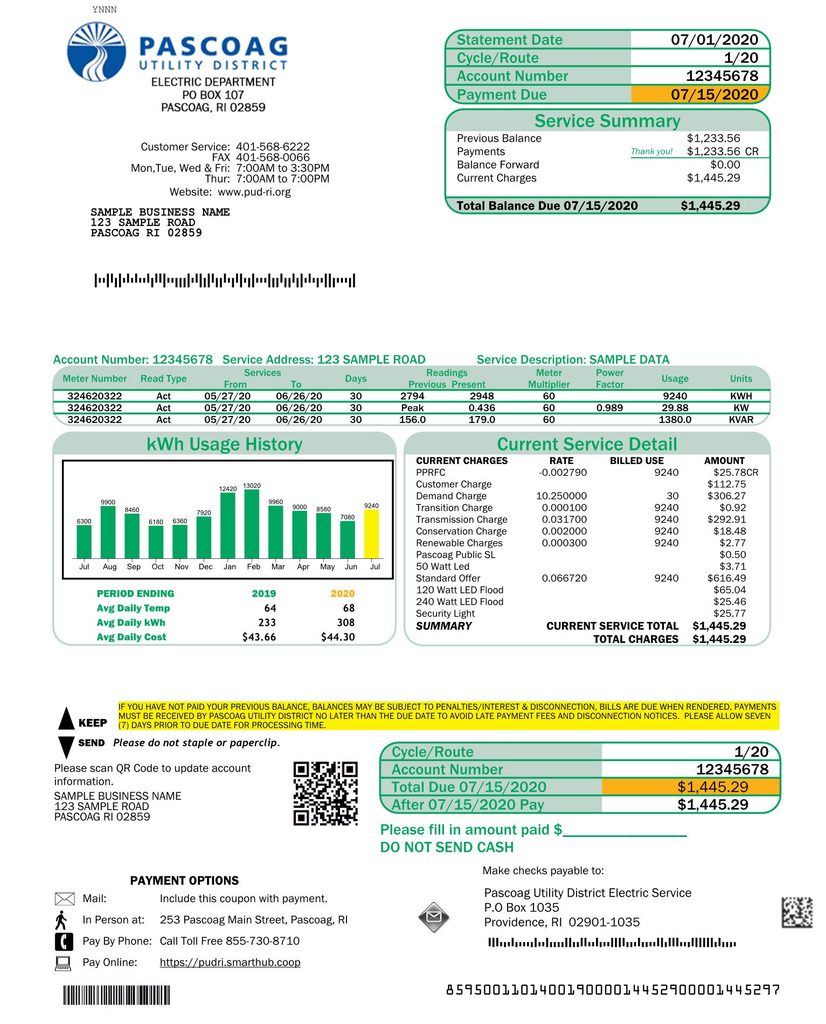
Utility Bill
A utility bill is one of the strongest proof-of-address documents available. It leaves no doubt that your address is a real, physical location.
Amazon Seller requires a utility bill for all applicants. Many banks and financial services also accept utility bills as proof-of-address for KYC purposes.
Acceptable utilities often include the following:
- Electricity
- Natural Gas or Heating Oil
- Water/Sewer
- Trash and Recycling
- Fiber internet
- Landline telephone
Note that platforms such as Amazon Seller now reject bills from phone systems such as VoIP (Voice over Internet Protocol) and mobile phone plans. These services do not need to be tied to a particular physical location, making them unsuitable for KYC purposes.
The downside of utility bills is that they are difficult for many business owners to obtain. Office and commercial landlords often include utilities such as electricity, water, and trash as part of the monthly rent. That leaves fiber-based internet as the most common proof-of-address document for LLC owners renting an office in a multi-tenant facility.
Costs vary, depending on the utility. A business internet plan typically costs $50-$70+ per month. Usually, there is a 30-day lead time before the utility provider issues the first bill.
Lease Agreement
A signed lease agreement between the LLC owner and a commercial landlord is another strong option. Because this is a binding legal document, it usually holds up better than a simple receipt from a subscription-based coworking space or virtual office. It also provides evidence that the address is tied to a physical location, and is not a CMRA-registered virtual mailbox or virtual office.
The downside of lease agreements is that the underlying office rental can be very expensive. Although budget options run $300-$400 a month on listing sites such as Craigslist, a typical city office can rent for thousands of dollars a month. Most commercial leases run for at least a year, making it a large commitment for the typical small business owner.
Here at Nomadpreneur, we offer remote lease agreements at a fraction of the usual cost. Hundreds of customers have used our unique business to obtain an affordable business address that is far stronger than a coworking space or virtual mailbox.
Start Your Journey
Become a Nomadpreneur
Get started now, or set up a free consultation
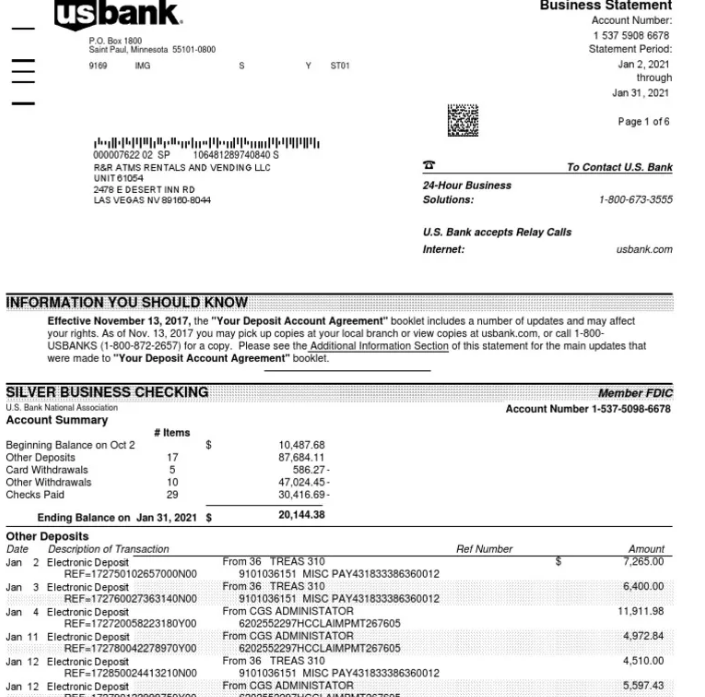
Bank Statement
A statement from an existing US bank account is often accepted as proof-of-address by other banks. This is because all banks are required to conduct KYC and AML checks as part of their customer verification processes.
In a sense, having an established account demonstrates that you’ve already undergone a degree of financial vetting. However, this approach assumes you’ve successfully opened the initial account using another acceptable form of address verification.
Obtaining a bank statement as a secondary proof-of-address document is always a good idea, because it gives you another form of documentation to present if a bank or payment processor requests additional verification. Also, it’s usually free and easy to obtain.
Tax Document
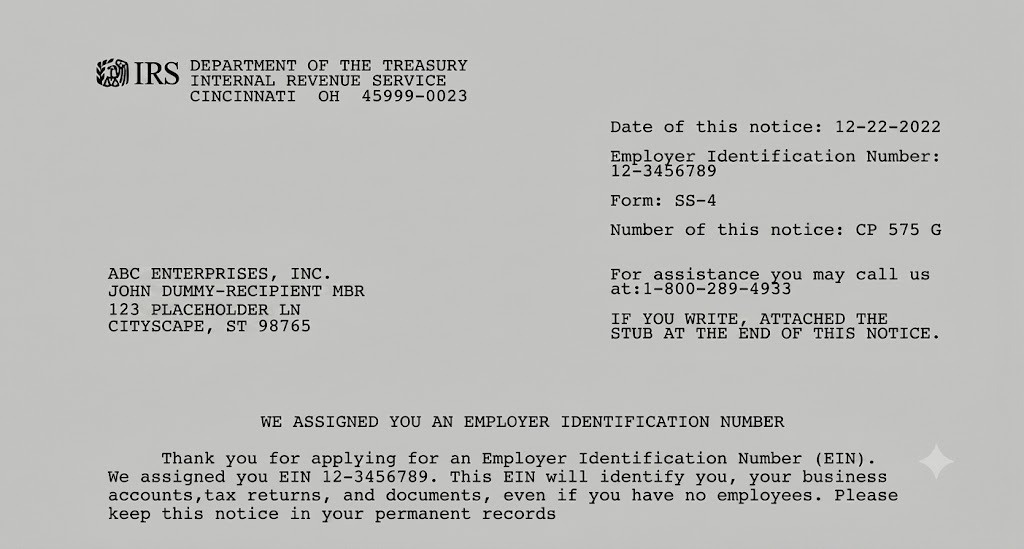
A federal or state tax document bearing your business address is widely accepted as proof of address. The most commonly used include:
- IRS CP575 or 147C letter (EIN confirmation)
- IRS tax notices or correspondence
- Filed tax returns (Form 1120, 1065, Schedule C, etc.)
- State tax registration or correspondence
Tax documents carry significant weight because they are issued by a government authority and are tied directly to your registered business entity. Many banks view IRS correspondence as among the most credible proof-of-address documents available.
The main downside is timing. If your business is newly formed, you may not yet have received any tax correspondence at your address, and the IRS can be slow to issue notices.
Business License or Registration
A business license, certificate of authority, or state registration document listing your business address is another solid option. These documents are issued by state or local government agencies and carry the same credibility as other official correspondence.
Common examples include:
- State business license
- Secretary of State registration or certificate of good standing
- Local municipal business permit
- Sales tax permit or registration
The strength of this document depends on the issuing authority and how recently it was issued. A certificate of good standing from the Secretary of State is generally viewed more favorably than a local business license.
Insurance Policy
A commercial insurance policy such as a general liability or business owner’s policy—issued in the name of your business and listing your business address can serve as proof of address with some banks and financial platforms.
Insurance policies are not universally accepted, but they can serve as a useful supplemental document. They are particularly helpful when paired with a primary proof-of-address document. Most small businesses carry some form of commercial insurance, making this a low-cost option to have in your documentation kit.
Document Age
Most banks and KYC platforms require that proof-of-address documents be issued within the last 90 days, and some require documents no older than 30 or 60 days. Whatever documents you choose, make sure you are presenting a recent copy. An outdated lease or old document is a common reason for rejection.